A solid silver cutlery piece is distinguished from a silver-plated piece by one verifiable element: the hallmark stamped into the metal. This small symbol, often barely visible to the naked eye, certifies the silver content of the alloy and identifies the manufacturer or the control organization. Without a legible hallmark, no reliable estimate is possible.
Reading the hallmark on silver cutlery
The hallmark is the mark applied by the guarantee office after analyzing the alloy. In France, it indicates the proportion of pure silver contained in the object. There are two hallmarks for French silverware: the first hallmark (represented by a Minerva with the number 1) and the second hallmark (Minerva with the number 2).
The first hallmark corresponds to a purer alloy than the second. This distinction has a direct impact on resale value. On a piece of cutlery, the hallmark is usually found near the junction between the handle and the functional part (blade, fork, spoon).
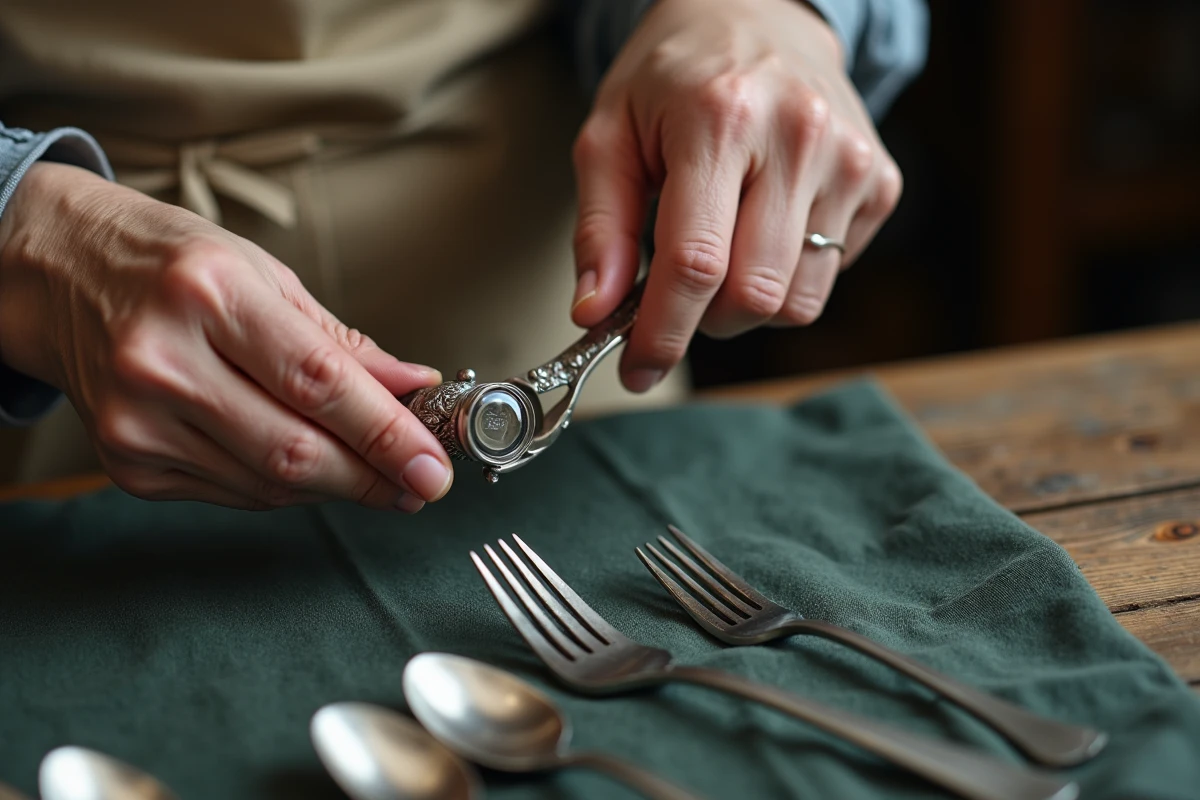
To locate it, tilt the cutlery under a low light. A magnifying glass with 10x magnification makes reading easier. The hallmark is tiny, sometimes partially erased by decades of polishing. A clear and well-stamped hallmark is a positive indicator, but a worn hallmark does not mean the object is fake.
Before attempting to buy silver cutlery with a hallmark, one must know how to distinguish the different marks present on a piece, as a cutlery item can bear multiple hallmarks simultaneously.
Master hallmark and additional marks on silverware
The master hallmark identifies the silversmith or the house that manufactured the object. It takes the form of a diamond containing the initials of the manufacturer, sometimes accompanied by a symbol (flower, star, animal). This diamond is the artisan’s signature.
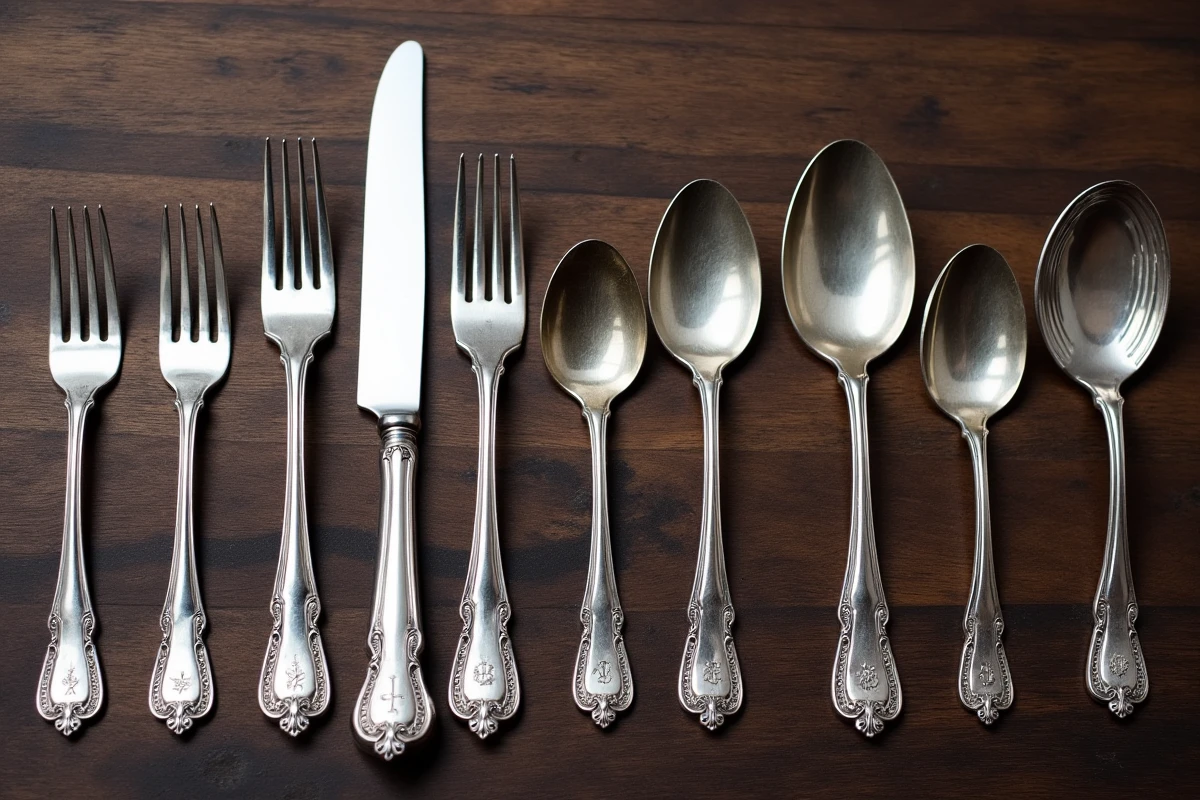
On antique cutlery, you can find up to three distinct hallmarks:
- The hallmark (Minerva), which guarantees the silver content of the alloy and certifies control by the guarantee office.
- The master hallmark (diamond with initials), which identifies the manufacturing workshop and allows for approximate dating of the piece.
- An import or specific control hallmark, present on pieces made abroad and then introduced to the French market.
The presence of the master hallmark, in addition to the hallmark, reinforces authenticity. Cutlery that bears only one hallmark deserves closer examination. Pieces without any visible hallmark cannot be considered guaranteed solid silver, even if their exterior appearance seems convincing.
Differentiating solid silver from silver-plated metal through simple tests
Silver-plated metal (or “silver-filling”) is a base alloy covered with a thin layer of silver. Visually, the difference from solid silver is almost imperceptible on an object in good condition. Hallmarks are the first filter, but other physical clues complement the analysis.
Weight is a reliable indicator: a solid silver cutlery piece is significantly heavier than a silver-plated piece of the same dimensions. Silver has a higher density than the common alloys used as a base for plating.
Wear also reveals the nature of the metal. On a silver-plated cutlery piece that has been used for a long time, the surface layer thins at points of friction (edges of the handle, back of the spoon). A yellowish or pinkish color appears where the base metal shows through. On a solid silver cutlery piece, wear never changes the color of the metal.
The cold test provides an additional indication: silver is an excellent thermal conductor. A solid silver cutlery piece immersed in hot water reaches the temperature of the liquid faster than a silver-plated object. This test remains indicative and does not replace reading the hallmark.
Common pitfalls when buying antique silver cutlery
The market for antique cutlery mixes authentic pieces, late copies, and mismatched assemblies. Some situations recur regularly and deserve particular attention.
Cutlery bearing the mention “silversmithing” or a brand name engraved in full (and not stamped) are generally not solid silver. Engravings in letters do not replace a hallmark stamped into the metal. A hallmark is distinguished from an engraving by its recessed relief, obtained by impact and not by incision.

Complete sets (a service for twelve, for example) sell better than isolated pieces. Check that all cutlery in a lot bears the same master hallmark. A lot with differing hallmarks from piece to piece is likely a reconstructed assembly, which reduces its value.
- Examine each piece individually, even in a lot presented as homogeneous. Sellers sometimes complete an incomplete service with pieces from another set.
- Beware of hallmarks that are too clear on cutlery presented as antique. A perfectly legible hallmark on an object supposed to be two centuries old may indicate re-hallmarking or reproduction.
- Always ask to handle the pieces. The feel in hand (weight, balance, temperature) provides information that no photo can convey.
Flea markets and local auctions remain interesting sources for silver cutlery, provided you check the hallmarks before any transaction. A purchase without physical verification of the hallmark remains a gamble, regardless of the sales channel. Correctly reading the marks stamped into the metal remains the only authentication tool accessible without resorting to a chemical test.