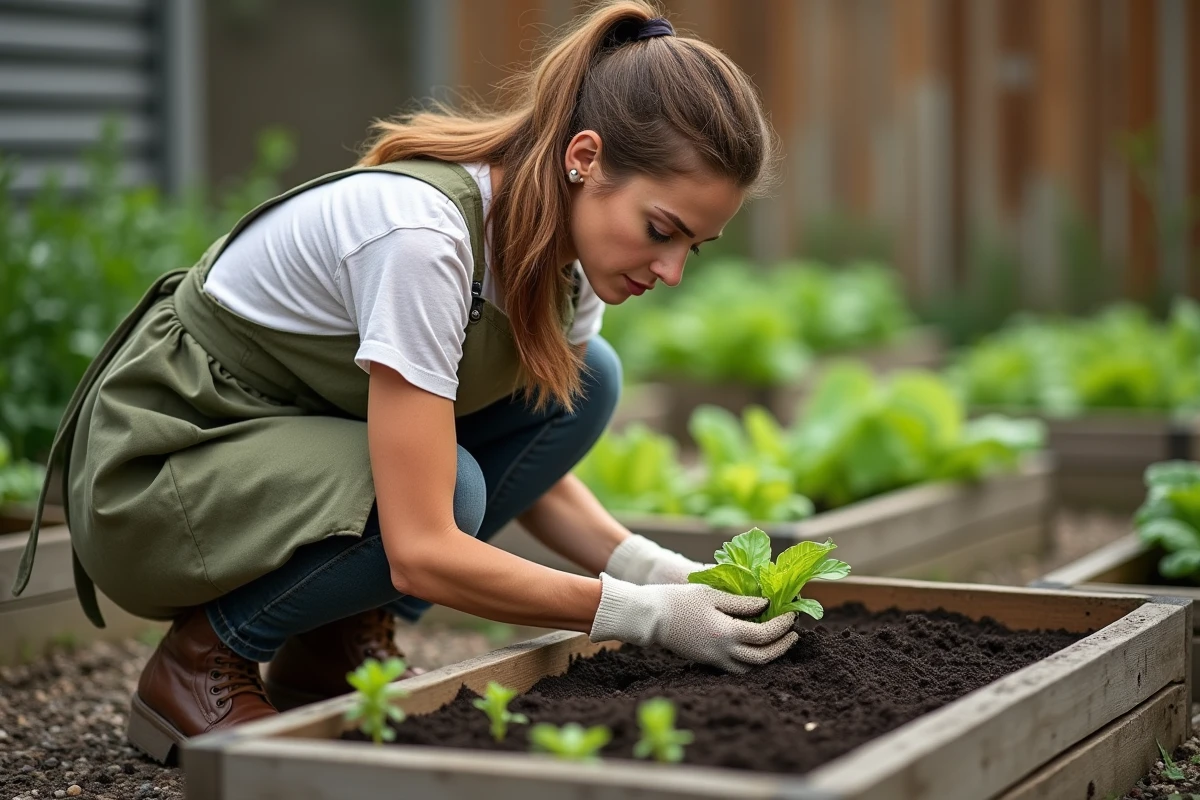
Your salads have been stagnant for two weeks while your neighbor’s are already ready to harvest. The problem rarely comes from the chosen variety. The growth rate of a salad mainly depends on three factors you can control: water management, soil temperature, and the timing of your harvest. A few concrete adjustments are enough to gain several days between sowing and the plate.
Cut-and-come-again harvest: the fastest method to eat salad
Are you waiting for a lettuce to form a nice head before picking it? That’s exactly what prolongs the wait. Young shoots cut a few centimeters above the ground regrow in just a few days, while a headed lettuce takes several weeks to reach maturity.
The principle is simple. You sow densely (mesclun, arugula, oak leaf) and cut the leaves with a knife when they reach the size of a palm. The root remains in the ground and produces a new shoot. Two, sometimes three successive harvests are possible from the same sowing.
To apply this technique with a precise schedule, Com 2 Net’s advice details the varieties best suited for cut-and-come-again and the sowing intervals to respect.
This approach changes the logic of the vegetable garden. You no longer seek to grow a single plant: you harvest early and often. The result is continuous fresh salad rather than a large one-time harvest.
Constant moisture and mulching: speeding up salad growth without fertilizer
Adding fertilizer to grow faster is a common reflex. In reality, regular watering matters more than fertilization for salads. Water stress, even brief, pushes the plant to bolt instead of producing leaves.
Stabilizing water at the base of the plants
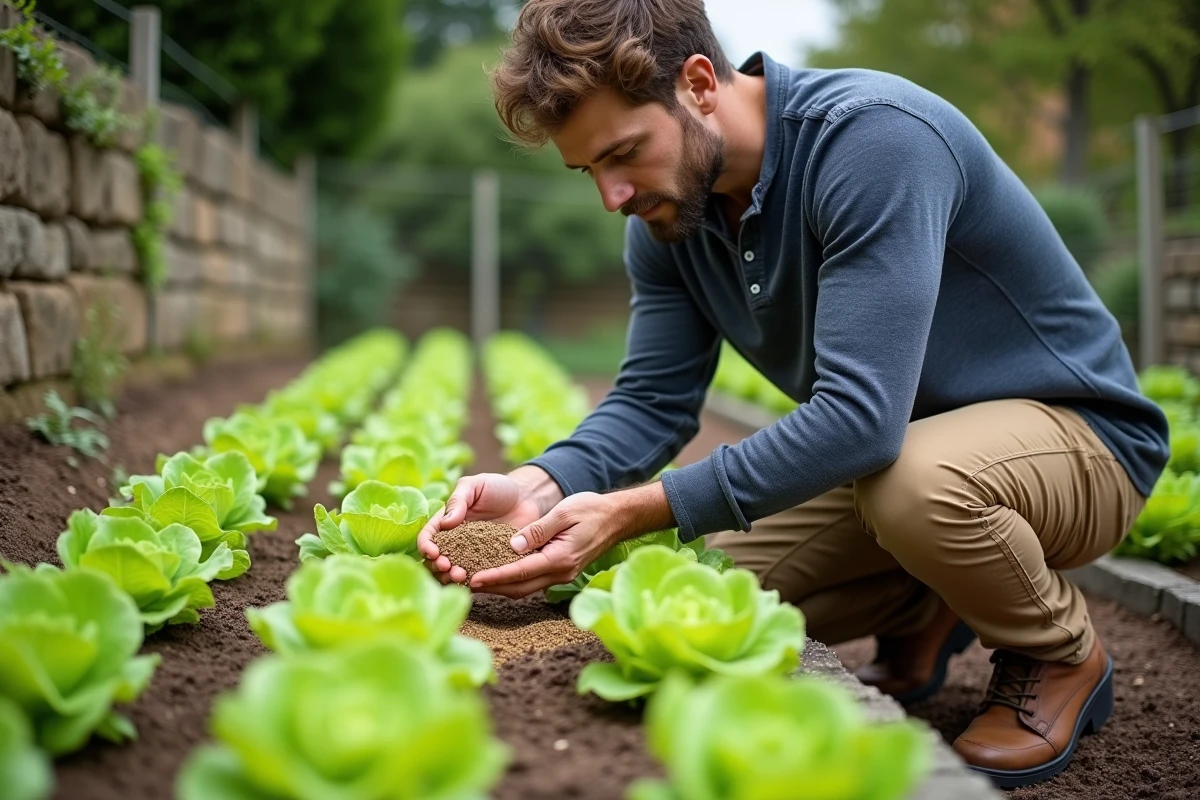
The soil around the salads must remain cool without being waterlogged. Light watering every morning works better than a heavy watering every three days. The goal is to keep the soil moist in the top few centimeters, where the short roots of the salad draw water.
Light mulching is the most cost-effective action to achieve this. A thin layer of dried grass clippings, straw, or fallen leaves limits evaporation and keeps the soil cool between waterings. No need for expensive materials: what matters is the consistency of the coverage.
Avoiding heat stress in summer
In the full summer sun, soil temperatures can rise well beyond what salads can tolerate. Have you noticed that your lettuces bolt as soon as the first heat hits? This is a direct reaction to thermal stress.
Two concrete solutions:
- Sow in partial shade, for example between rows of tomatoes or under a tree with light foliage, so that the salads receive morning sun but are protected during the hottest hours
- Install a shade cloth or a simple net above the growing beds, which lowers the temperature by several degrees at the leaf level
- Shift summer sowings to early evening, when the soil has started to cool, to prevent the seeds from cooking in the early hours
Stabilizing temperature and humidity extends the leafy phase, the period when the salad grows. Any delay in bolting means more harvest days gained.
Mini-tunnel and cloth in the vegetable garden: creating a microclimate for your salad sowings
In spring, cool nights slow down germination and the growth of young plants. A plastic mini-tunnel or a simple forcing cloth placed on hoops changes the game.
The cloth creates a bubble of warmth around the sowings. The temperature under the tunnel remains higher at night and more stable during the day. Seeds germinate faster, and seedlings establish themselves without experiencing the climatic shocks of early season.
A secondary advantage deserves mention: the insect net also protects young shoots from slugs and aphids. In early spring, slugs are particularly active and can wipe out an entire sowing overnight. The cloth thus plays a dual role, providing thermal protection and a physical barrier.
You can remove the cloth as soon as the plants reach about ten centimeters and nighttime temperatures stabilize. At this stage, the salads are robust enough to grow uncovered.
Staggering salad sowings for continuous harvest throughout the season
Sowing all your salads on the same day results in a harvest peak followed by a gap of several weeks. To have salad available continuously, sow a small row every ten to fifteen days from spring to autumn.
Adapt the varieties to the season:
- In spring, favor cut-and-come-again lettuces and oak leaves, which tolerate still cool nights and grow quickly under cloth
- In summer, opt for heat-resistant varieties (batavia, romaine) that bolt less quickly
- In autumn, chicories and lamb’s lettuce take over and tolerate the first cold
This rotation ensures a steady production without requiring much space. A few square meters are sufficient if each row is sown at the right time.
A staggered sowing also reduces waste: you harvest just what you need, and the following plants are already on their way. This is the difference between a vegetable garden that produces in waves and one that feeds the kitchen every week.
The last point to keep in mind concerns the soil. Salads have shallow roots and draw nutrients from the top few centimeters of soil. A simple application of mature compost on the surface before each new sowing is enough to maintain fertility without turning the soil. Compost also improves water retention, which ties back to mulching and regular watering.