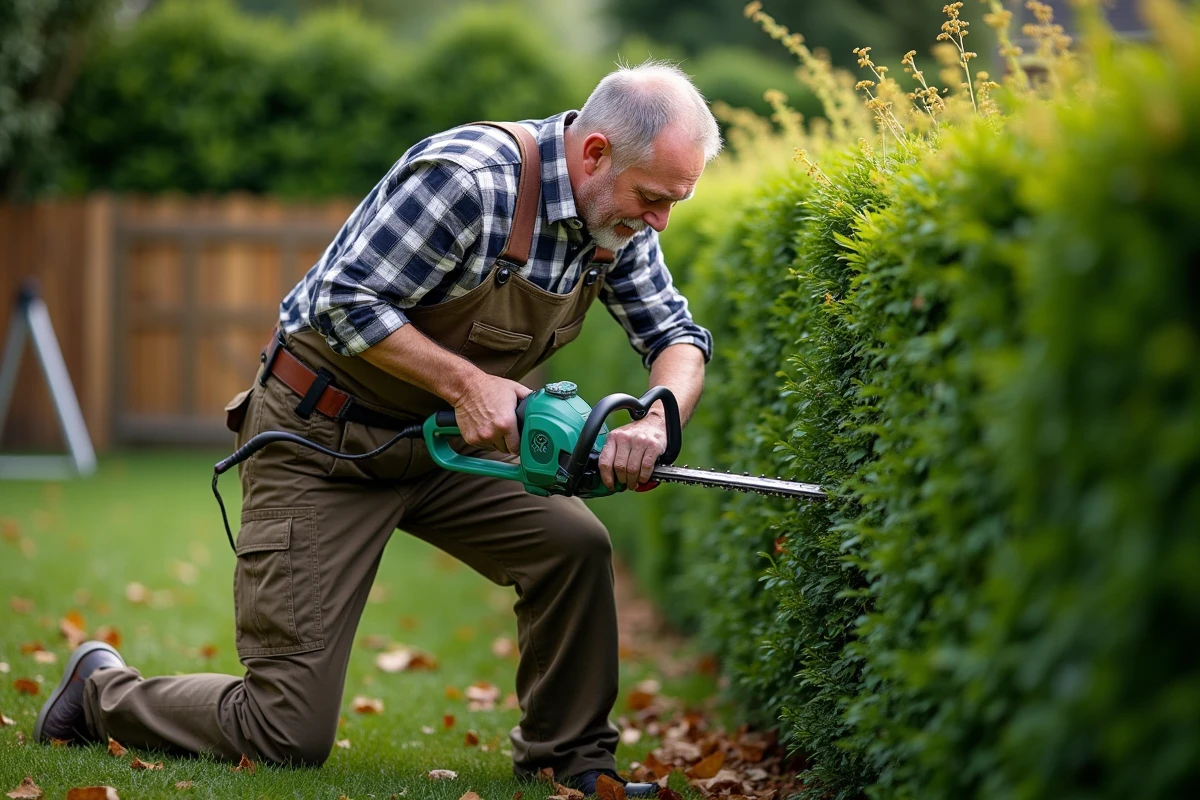
An electric hedge trimmer can display high power without necessarily guaranteeing an effective cut. Some blades promise robustness but struggle to cut through thick branches, while compact models surprise with their endurance.
The variety of options, from safety systems to types of batteries, often confuses even the most experienced users. Manufacturer recommendations, sometimes contradictory, add to the confusion. Essential criteria are not always found in the technical specifications.
Why the choice of electric hedge trimmer really influences the maintenance of your garden
The type of hedge trimmer adopted is never neutral: it transforms the way one interacts with green spaces. A corded electric hedge trimmer attracts for its lightweight, silent operation, and its ability to never run out of power, as long as you stay close to the outlet. For those whose hedges border the back of the property, the battery-powered electric hedge trimmer is essential, offering appreciated freedom of movement. This choice depends on the constraints of the garden, but also on the pace and quality of maintenance desired.
The tool does not simply obey: it imposes its own rules. The power, ranging from 300 to 1100 W, determines whether you can tackle thick branches with ease. The blade length (20 to 80 cm) affects the speed and precision of the cut. As for the spacing of the teeth, between 12 and 38 mm, it determines what the device can actually cut. Taking the time to carefully choose these parameters saves you from fatigue and incomplete trimming.
For hedges that reach for the sky, telescopic hedge trimmers are the only ones that rise to the occasion. The gas-powered option remains the domain of large estates or very dense hedges, but for most private gardens, electric models stand out: simplicity, low vibrations, and limited maintenance. Those who want to compare models and understand their uses will find a reliable overview on taille-haie-electrique.com, a site that puts different solutions into perspective and helps refine your choice.
What criteria to prioritize to find the device suited to your needs
The choice of an electric hedge trimmer relies on several technical parameters to closely examine, so that the tool fits the reality of the garden and the characteristics of the hedges. The power (300 to 1100 W) guides the cutting capacity, especially on hardwood. A weak motor struggles, while an overly powerful device unnecessarily weighs down the arms during light work.
The blade length, from 20 to 80 cm, changes the game: a short blade for low hedges or sculpted shapes, a long blade for taking down volume in fewer passes. The tooth spacing (12 to 38 mm) determines the maximum diameter of branches accepted: it should be adjusted to the maturity and density of the hedge.
Here are the points to compare to avoid mistakes:
- Weight: between 2 and 7 kg, a criterion that affects agility and fatigue during long sessions.
- Power source type: corded for unlimited work, battery for freedom of movement (expect 30 to 90 minutes depending on the models).
- Noise level and vibrations: lower on electric models, which improves comfort and neighborly relations.
- Safety: protective sheath, double switches, ergonomic handle, all elements that reduce risks.
Other elements can make a difference: accessories like a debris collector, rotating handle, lithium-ion batteries for cordless devices. In terms of budget, corded models start around €25 and go up to €200, while battery models range from €50 to €500. And to work safely, gloves and protective glasses are essential, regardless of the model chosen.

Comparisons, reviews, and user feedback: allies for a regret-free purchase
Limiting oneself to the technical sheet of an electric hedge trimmer would be reductive. The comparisons published by specialized press or independent sites provide a concrete and nuanced view of performance. Real power, maneuverability, autonomy, user comfort: each test sheds light on differences that may be invisible from simply reading a manual. Field tests also reveal weaknesses: capacity on thick branches, cutting quality on old hedges, or battery longevity under demanding conditions.
User reviews, whether from professionals or passionate gardeners, carry significant weight. Some share their feelings about managing vibrations during prolonged trimming, while others highlight handling in wet conditions. Feedback discusses motor robustness, ease of cleaning, or the advantage of a dual-action blade for achieving a clean result. Sometimes, a detail overlooked by the manufacturer makes all the difference in a garden exposed to wind or sun.
Here are the major contributions of these resources:
- The comparisons highlight differences based on blade length, weight, or perceived noise.
- User feedback reminds us of the importance of regular maintenance and the necessity of adhering to local regulations.
It’s better to rely on platforms where expertise is not hidden, where the diversity of lived situations enriches the reflection. Taking the time to consult this feedback and compare the specifics of the considered electric hedge trimmer to your own needs helps avoid unpleasant surprises. You will then be ready to trim, season after season, without fearing the next growth.