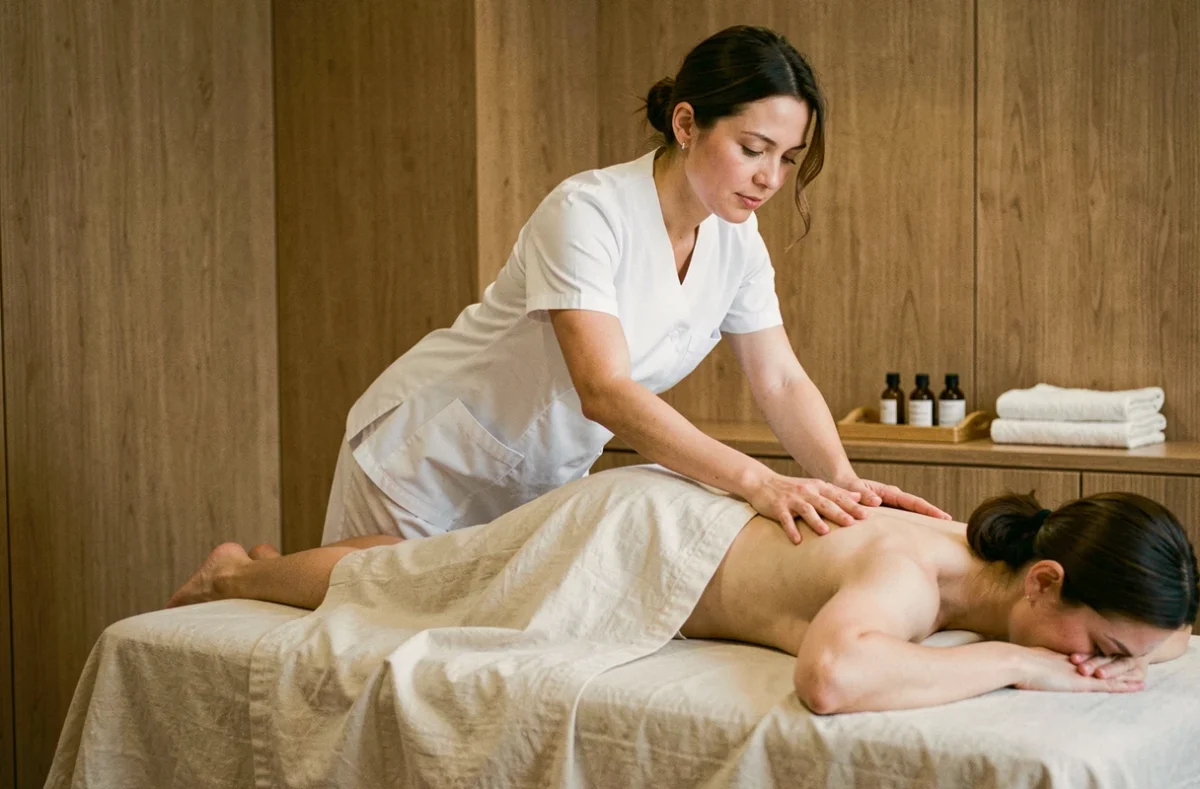
The price displayed in a spa window or on a booking platform does not always reflect what you will actually pay. Between travel costs for an at-home massage, the cost of oils used, the actual duration of the session, and the practitioner’s positioning, the price of a massage varies significantly from one service to another. Understanding what makes up this price allows for comparing offers without relying solely on the gross amount.
What the price of a massage includes (and what it hides)
A session price does not only compensate for the time spent on the table. The practitioner includes in their calculation the rent of the premises or travel expenses, the cost of consumables (oils, towels, disposable linen), the depreciation of the table and equipment, as well as their social charges and professional liability insurance.
French regulations require that the actual price paid be clearly displayed before purchase. For services booked online, an attractive price can become misleading if fixed fees are added at the time of payment. This point of vigilance particularly concerns matchmaking platforms, where the displayed price sometimes corresponds to the practitioner’s share, excluding commission.
To navigate among pricing grids, consulting the average price of a massage on Belle et Naturelle provides a useful benchmark depending on the type of service and duration chosen.
Massage prices in the provinces, in Paris, and at home: the real differences
The location of the practice remains the factor that weighs most heavily on the final price. In the provinces, a classic one-hour session generally ranges between 50 and 80 euros. This price can rise significantly in major metropolitan areas or tourist zones, where the rent of the premises and the purchasing power of the clientele justify a higher positioning.
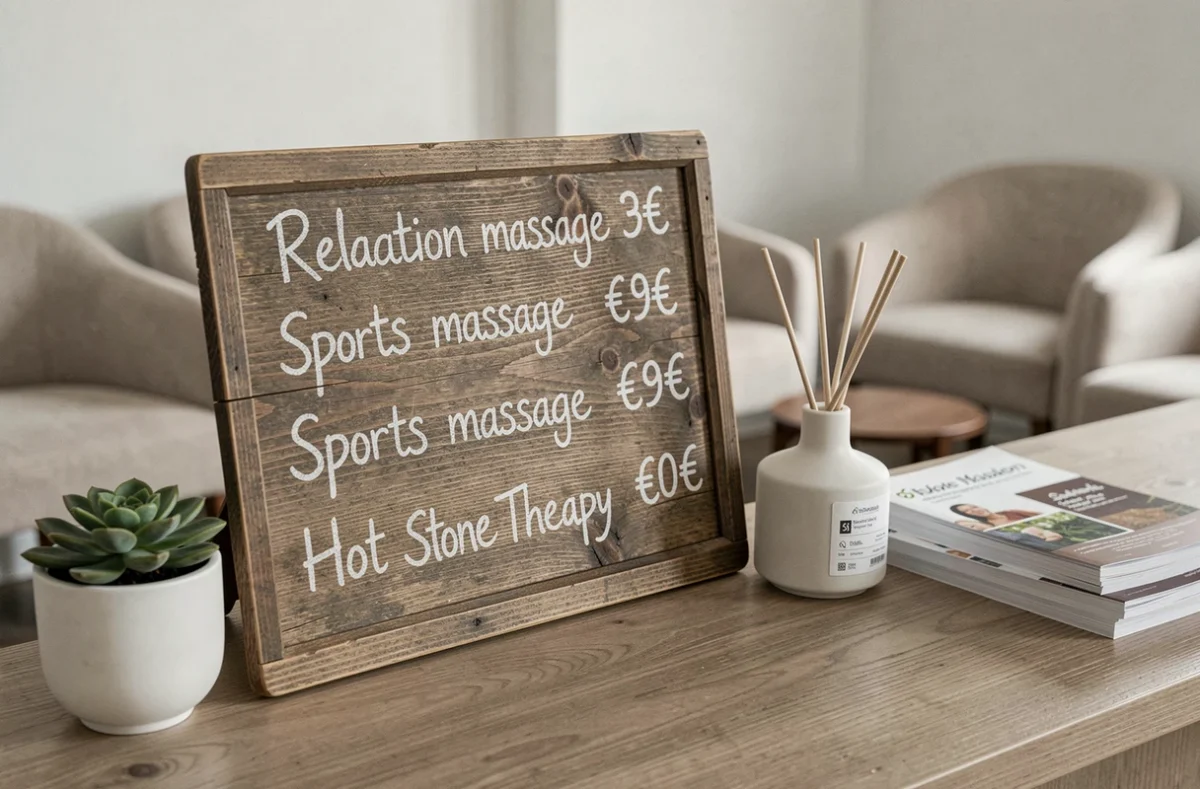
In Paris, pricing grids start noticeably higher. A practitioner located in a central neighborhood displays prices that reflect both their expertise and the cost per square meter of their premises. High-end spas add to this the environment (robes, relaxation area, cosmetic products), which increases the bill without the technical gesture being fundamentally different.
At-home massages introduce an additional variable: the practitioner’s travel expenses. Depending on the distance and geographical area, a supplement is often charged. Matchmaking platforms sometimes include these fees in the displayed price, sometimes not. Checking the total amount before confirmation avoids unpleasant surprises.
Couple massages, Thai, facial: how the type of service affects the price
Not all massages require the same level of training, preparation time, or equipment. The price logically varies depending on the chosen technique.
- The classic relaxation massage (Swedish, Californian) remains the most common and accessible in terms of price. The session typically lasts one hour and does not require specific equipment beyond a neutral oil.
- The couple massage involves two practitioners working simultaneously or a room set up for two people. The price is logically higher, often close to double that of an individual session, since the resources mobilized are multiplied.
- The Thai massage is performed clothed, on the floor, on a futon. The specific training required and the often longer duration (sometimes up to two hours) justify a price positioning above the average.
- Facial treatments (scrubs, facial massage, drainage) are shorter services, generally charged below a full body session. Their price mainly depends on the products used: a scrub with rare oils will cost more than a treatment with standard products.
Duration remains a direct lever on price. Moving from 30 minutes to 60 minutes does not always double the price, but the difference is significant. Some practitioners offer 90-minute sessions that provide a better value per minute than shorter formats.
Wellness masseur: an unregulated activity that influences prices
Wellness massage is not a regulated profession like physiotherapy. No specific state diploma is required to practice as a relaxation practitioner. This lack of entry barriers has a direct effect on the market: levels of training, experience, and therefore prices are very heterogeneous.
A practitioner trained in a recognized center, holding certifications and several years of practice, will justifiably display higher rates than a beginner starting out in a micro-enterprise. However, a low price does not automatically mean a lower quality service, just as a high price does not guarantee superior expertise.
The practitioner must remain within the realm of relaxation and not present their services as medical treatment. Law No. 2024-420 of May 10, 2024, has strengthened the penalties applicable to misleading commercial practices disseminated through digital means. Therapeutic promises (healing, treatment of pathologies) expose the professional to real legal risks, a point that the DGCCRF actively monitors.
Prepaid packages and cures: real savings or a tricky commitment
Package deals (5 sessions, 10 sessions) constitute a distinct business model from single-session massages. The price per session decreases, which seems advantageous. The trade-off: a financial commitment upfront, sometimes non-refundable in case of interruption.
Before subscribing to a package, checking the cancellation conditions and the validity period of the sessions remains the most basic precaution. A package that seems advantageous on paper loses all interest if three sessions expire without being used.
Ultimately, the price of a massage depends on a set of variables that the gross price does not summarize: location, technique, duration, additional fees, level of training of the practitioner. Comparing offers based on these criteria rather than solely on the displayed amount remains the most reliable way to find a service that meets your expectations and budget.