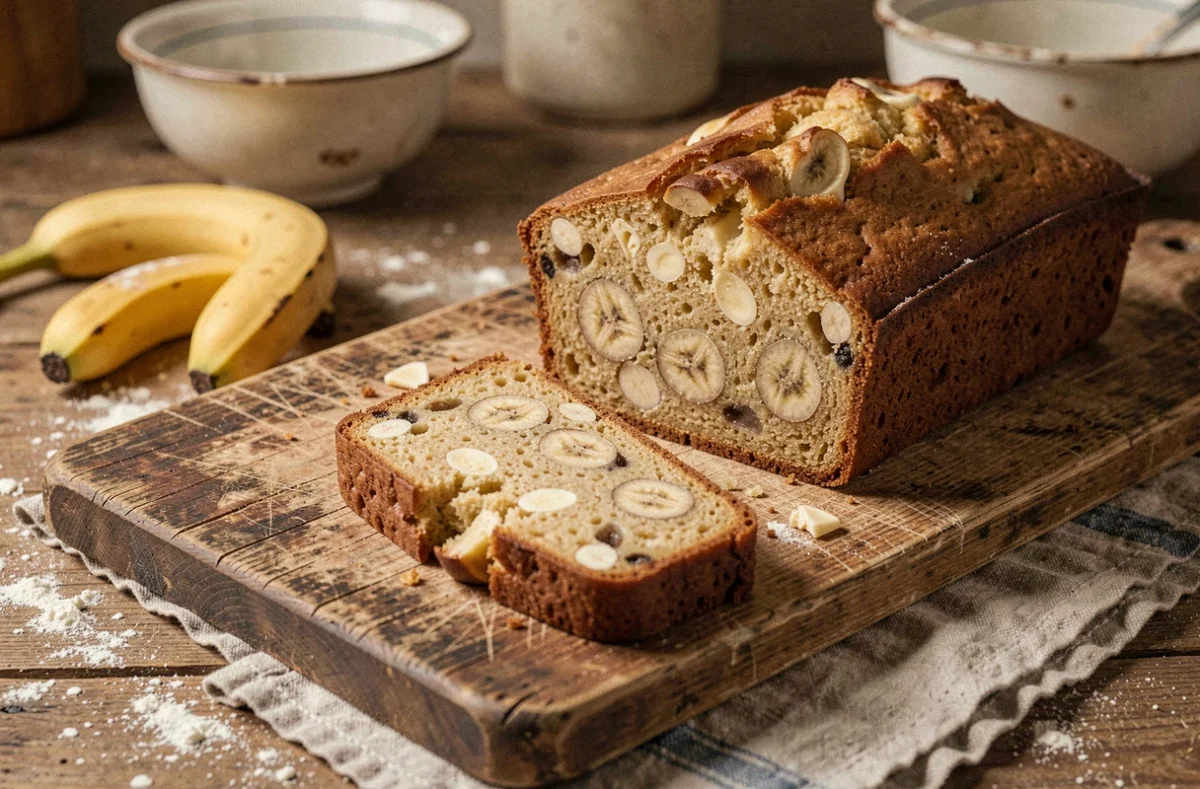
A banana and white chocolate cake relies on a balance between the natural moisture of the fruit and the thermal sensitivity of white chocolate. Successfully making this homemade cake requires mastering these two parameters before even thinking about the mold or the oven. The banana provides sugar, water, and binding, while the white chocolate, more fragile than dark chocolate, requires controlled melting to avoid becoming grainy.
Banana Moisture: The Parameter Most Recipes Ignore
Ripe bananas contain a lot of water. The more brown spots they have, the sweeter they are, but also the more liquid they release into the batter. An excess of moisture results in a dense cake in the center, with a crust that browns too quickly on the surface while the inside remains raw.
An effective method is to reduce the banana puree in a saucepan for a few minutes over medium heat, stirring, to evaporate some of the water. The puree becomes thicker and more concentrated in flavor. It should then be allowed to cool completely before being incorporated with the other ingredients. This step produces a more stable and even crumb.
If you are looking for a banana white chocolate cake recipe on Chapeau Melon, you will find a good starting point for the basic proportions. Adjusting the moisture remains the key to transitioning from a decent result to a truly moist cake without gummy areas.
Choosing well-ripened bananas is often recommended for flavor. This is true, but it also means compensating for their water content. Adjusting the amount of flour is not enough: too much flour weighs down the texture. Reducing in the saucepan directly addresses the issue without altering the dry/wet balance of the rest of the recipe.
Melting White Chocolate: Avoiding Seizing
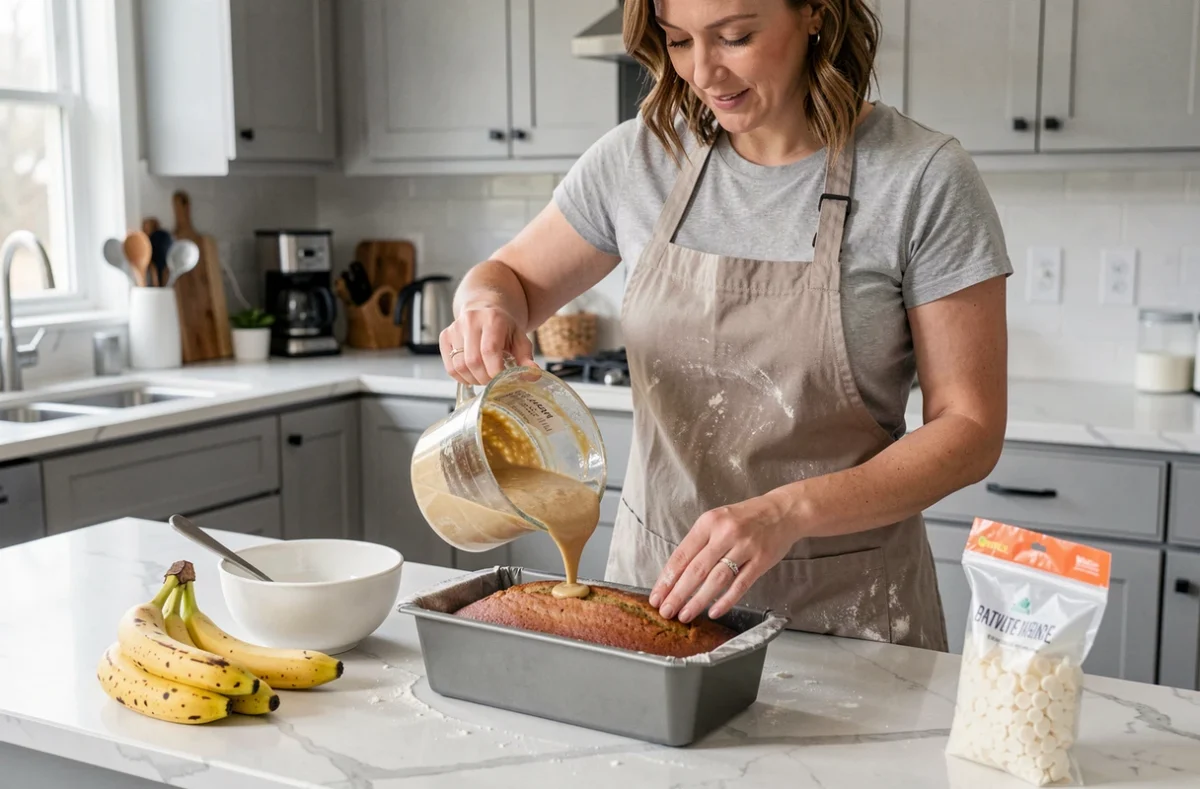
White chocolate does not behave like dark or milk chocolate. Its cocoa butter and milk solids content makes it more sensitive to heat. A temperature that is too high or a drop of water in the container is enough to cause “seizing”: it then forms a grainy mass that is impossible to smooth.
There are two reliable methods:
- A double boiler over low heat, stirring frequently, with a perfectly dry container. The bottom of the bowl should not touch the water.
- The microwave in short bursts (about fifteen seconds at medium power), mixing between each interval. This approach limits the risk of localized overheating.
- In both cases, the container must be absolutely dry before placing the chocolate in it. A single drop of water causes seizing.
Once melted, the white chocolate can be incorporated warm into the batter, or poured in chunks (chips or chunks) if you prefer melting pockets in the cake. Both approaches yield different results.
Melted White Chocolate in the Batter or in Chips
Melted and mixed into the batter, white chocolate adds a diffuse vanilla note and a more melting texture to the entire cake. The flavor is subtle, evenly distributed.
In chips or coarse pieces, it creates pockets of sweet concentration that contrast with the crumb. The result is more indulgent, visually more pronounced when cut. You can combine both: some melted into the batter, some in chunks added at the last moment.
Roasted White Chocolate: A Variation That Changes the Flavor Profile
White chocolate can be roasted before being added to the cake. The process involves spreading it on a baking sheet, heating it at low temperature in the oven, and stirring regularly until it achieves a golden color. This transformation develops caramelized and toasted notes absent from classic white chocolate.
The result is similar to brown butter in terms of flavor profile. Paired with banana, it creates a more complex harmony than the standard banana-white chocolate duo, which tends toward vanilla sweetness. Roasting brings a slight bitterness that balances the natural sugar of ripe bananas.
This step requires patience. Roasted white chocolate must cool and solidify before being crushed and incorporated into the batter. If too hot, it melts into the mixture and loses the desired texture effect.
Baking and Internal Temperature of the Banana Cake
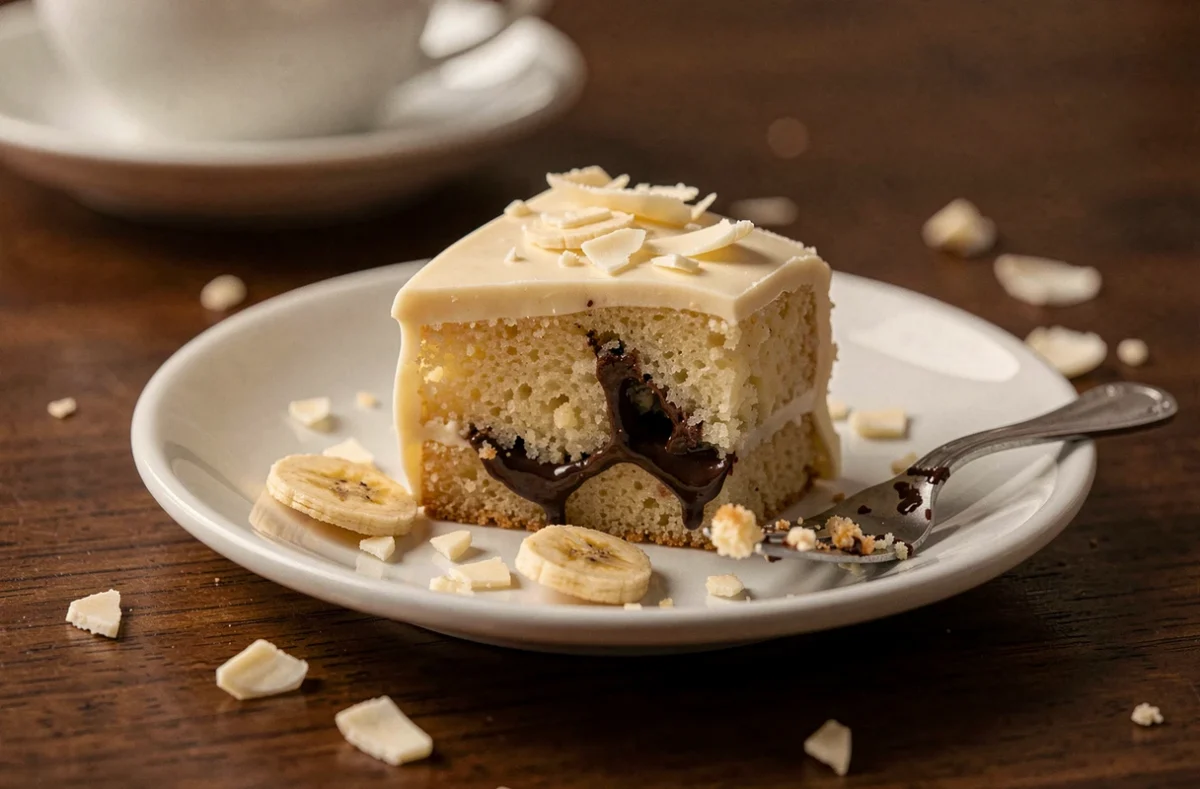
The baking of a banana and white chocolate cake is not judged solely by appearance. The crust browns quickly due to the sugars in the banana, which can give the impression that the cake is cooked while the center remains moist.
The internal temperature is the most reliable indicator. A kitchen thermometer inserted into the center of the cake allows you to check doneness without repeatedly opening the oven. Most cakes of this type reach the right consistency when the center exceeds a certain thermal threshold, which a classic toothpick struggles to detect in a naturally moist batter.
Another common pitfall: taking the cake out too early for fear of drying it out. The banana retains internal moisture, so a banana cake can handle a few extra minutes of baking much better than a classic butter cake. If the surface browns too quickly, covering the mold with aluminum foil during the last third of baking protects the crust without interrupting the rise in internal temperature.
Storage After Baking
A banana cake keeps well at room temperature for two days, wrapped or placed in an airtight container. Beyond that, the refrigerator extends its shelf life, but the texture firms up in the cold. Taking the cake out about twenty minutes before serving allows it to regain its moistness.
Freezing also works: cut the cake into slices, wrap them individually, and then thaw them at room temperature. White chocolate withstands this treatment well, unlike some frostings that break down.
The difference between a plain cake and a successful cake rarely lies in the recipe itself. Mastering the water content of the banana, melting the white chocolate gently, and checking doneness in ways other than visually are three simple technical gestures that transform the final result.