
Freeway or fast national road: the choice between these two options is not just a simple comparison of travel time. Tolls, fuel consumption, vehicle wear and even the payment method (free flow or classic barrier) alter the actual cost of a journey. This article measures the concrete differences between toll highways, free highways, and national roads to determine what weighs most in the balance.
Free flow toll on the highway: a sometimes invisible cost
The free flow toll system, already active on the A79 and the A13-A14 axis, removes physical barriers. Gantries read the license plate or the toll badge, and then the driver has 72 hours to pay the toll. The rate remains the same as that of a classic toll, but a missed payment can lead to an increased flat fine.
This mechanism changes the perception of cost. On a national road, the expense is limited to fuel and mechanical wear. On a free flow highway, the absence of a payment gesture at the time of passage creates a risk of an unexpected bill, especially for occasional drivers who do not have a toll badge. The announced opening of the A69 Castres-Verfeil in October 2026 is expected to add a new section to this system.
To objectively compare the two options, it is useful to read the article on Actu Mécanique which details the expense items journey by journey.
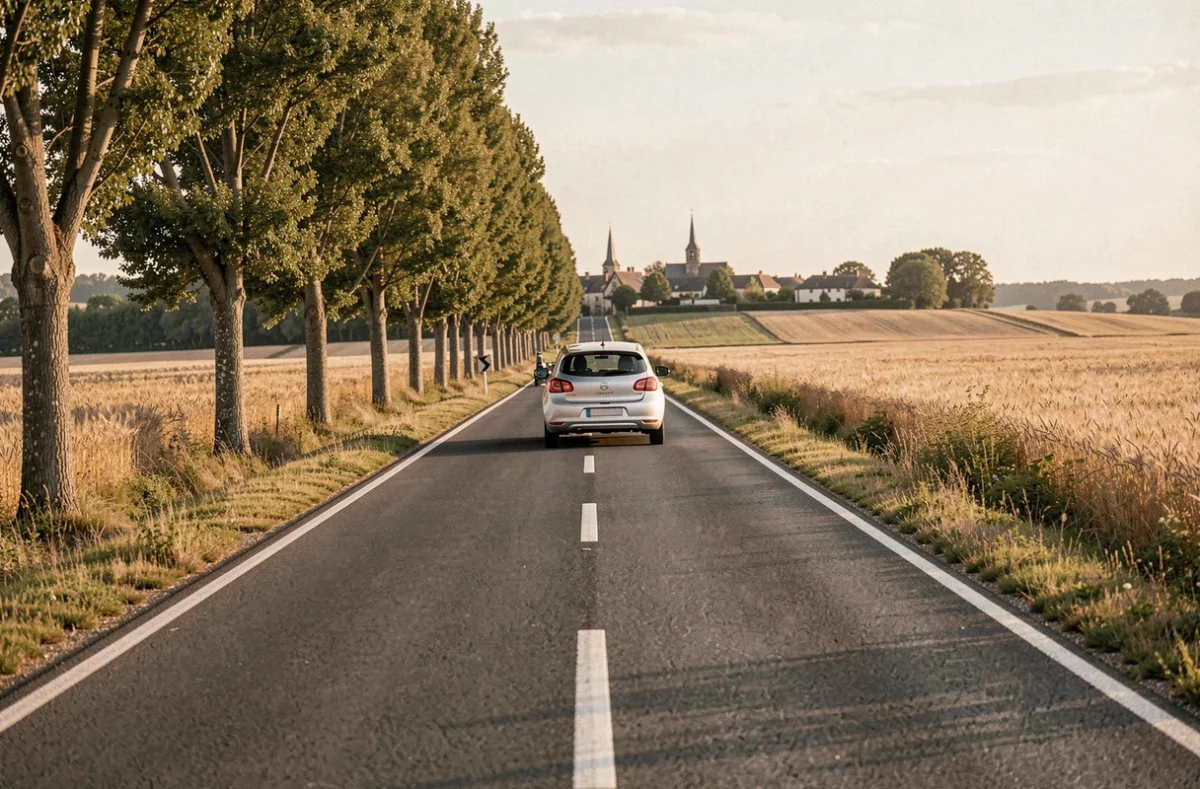
Toll highway versus fast national road: comparative table of expense items
The differences between toll highways and fast national roads vary depending on the distance traveled, the vehicle, and the price of fuel. The table below summarizes the main items to consider.
| Criterion | Toll highway | Fast national road / free highway |
|---|---|---|
| Maximum speed limit | 130 km/h | 80 to 110 km/h depending on the sections |
| Toll | Yes (barrier or free flow) | None |
| Fuel consumption | Higher (higher speed) | Lower (reduced engine speed) |
| Travel time | Significantly shorter | Longer, variable depending on local traffic |
| Mechanical wear | Moderate (linear driving) | Frequent braking and acceleration |
| Risk of unexpected delay | Construction, traffic jams at tolls | City crossings, traffic lights, roundabouts |
Fuel overconsumption at 130 km/h can offset some of the savings made on the toll. Driving at 110 km/h on a 2×2 lane national road significantly reduces consumption compared to a maximum speed highway journey.
Toll rates on highways: regulatory variations to watch
The price displayed on a highway journey is not fixed. The example of the A69 illustrates this instability well. An amendment concluded in February 2025 provided for a 33% reduction on certain sections of this highway. The Council of State issued an unfavorable opinion in 2025-2026, and this reduction is not expected to apply. The initial contractual rate will therefore be retained at the opening.
This type of turnaround has a direct consequence for motorists who calculate their travel budget in advance. A route planned as advantageous due to an announced discount can suddenly become more expensive than a national road.
Temporary discounts on certain toll sections
Occasional circumstances can reverse the cost/benefit ratio. During the construction of the Saint-Cloud tunnel on the A13, the state implemented a preferential rate on the A14, used as a detour route. In this specific case, taking the toll highway was cheaper than usual, making the parallel national road less financially relevant.
These adjustments remain localized and time-limited. They show that the highway/national road comparison deserves to be redone before each trip, not just once for all.
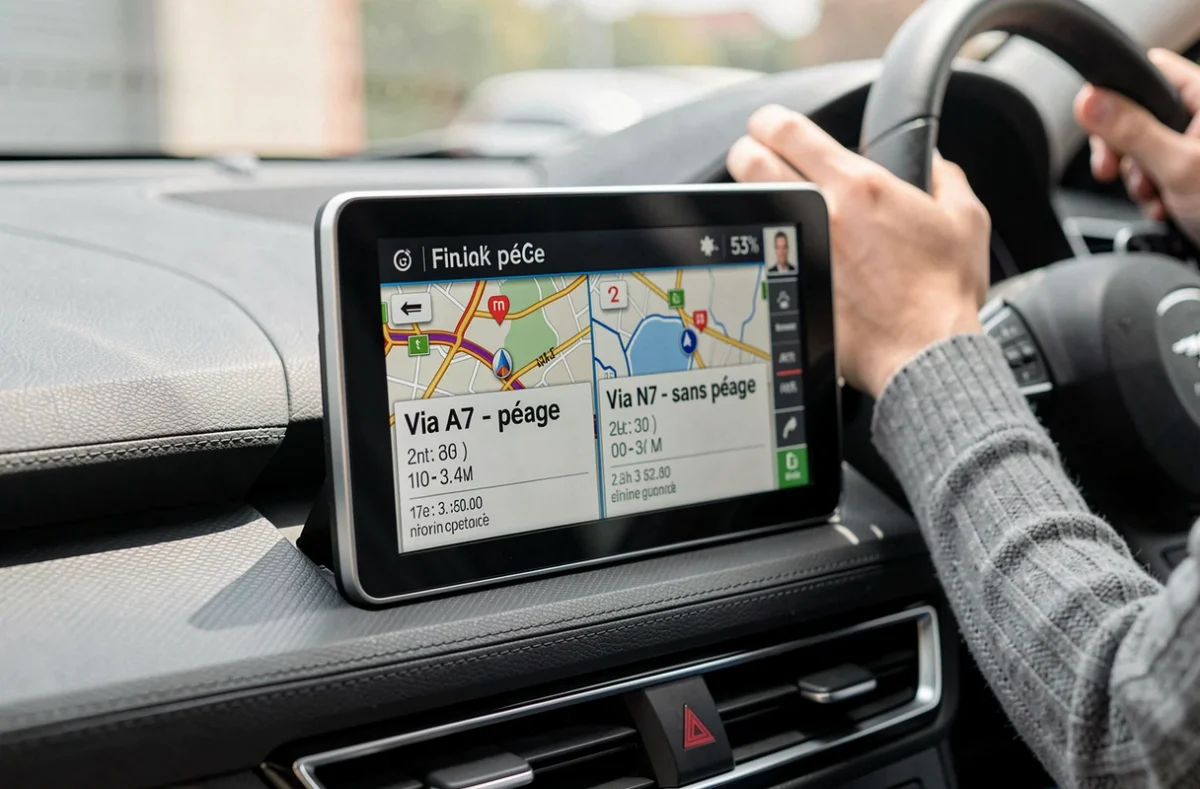
Calculating the real cost of a journey: criteria that GPS does not show
Navigation apps display travel time and sometimes the estimated toll cost. They rarely include other expense items. Here are the elements to consider for a complete calculation:
- The fuel differential between 130 km/h and 90-110 km/h represents several liters on a journey of a few hundred kilometers, which reduces the apparent gap with the toll
- The wear on brake pads and tires increases on winding national roads or those crossing urban areas, an item often overlooked
- The time spent on the road has an indirect cost: increased fatigue, additional meals, late arrival which can lead to an unexpected hotel night
- The payment method for the toll (toll badge with monthly subscription, payment by plate in free flow) can generate additional fees or, conversely, provide access to occasional discounts
On a short journey (less than two hours), the national road often offers a better cost/time ratio. The toll weighs proportionally heavier and the time gain remains modest. On a long journey, the highway regains the advantage due to the regularity of the cruising rhythm and the reduction of fatigue.
Free highway sections in France: a network to know
Not all French highways are toll roads. Some free sections offer driving conditions similar to toll highways (2×2 lanes, speed limited to 110 or 130 km/h) without any toll fees. These free routes are concentrated around major urban areas or on sections historically funded by the state.
Identifying these sections before departure allows for building a mixed route combining free highways and fast national roads, to limit tolls without excessively lengthening the journey. Route calculators generally offer a “no toll” option that uses these sections.
The choice between toll highways and fast national roads ultimately depends on three variables: the distance of the journey, the price of fuel at the time of departure, and personal tolerance for driving time. On intermediate routes, between two and four hours, the financial gap often remains tight, and it is the driving comfort that tips the balance.