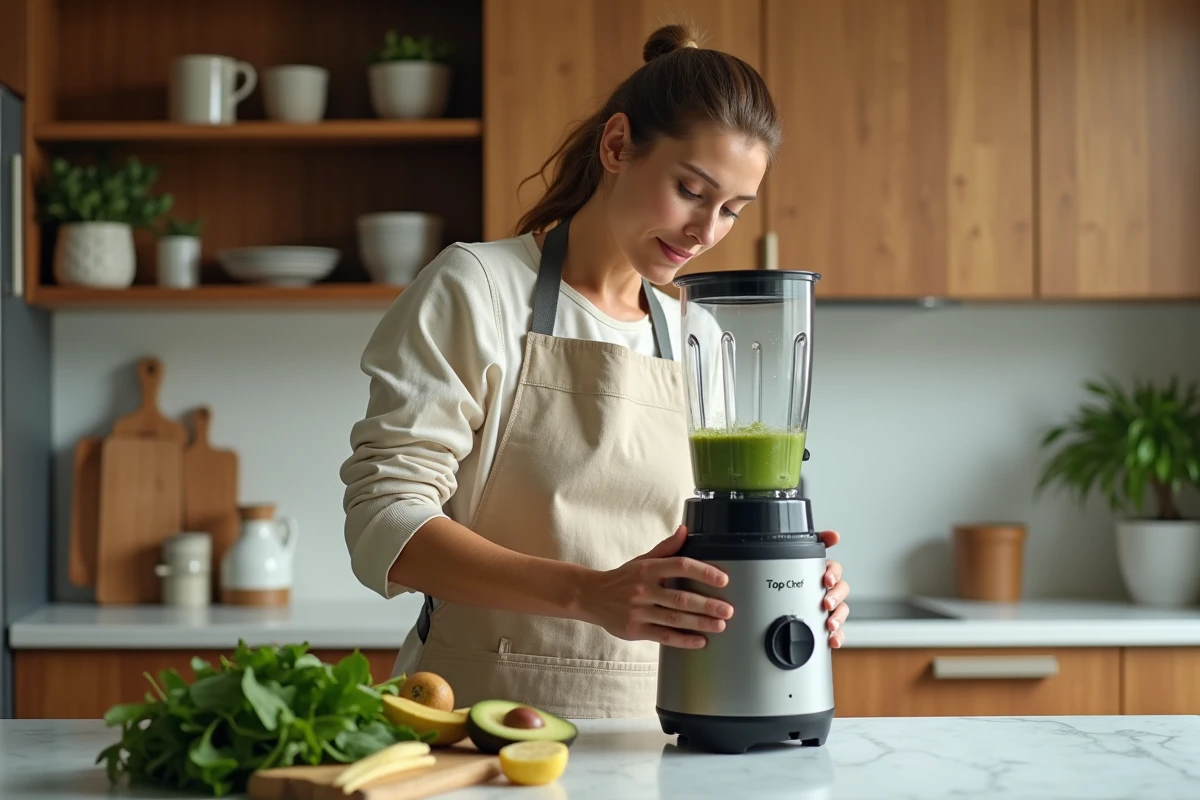
A “Top Chef” branded blender refers to a device sold under a license derived from the M6 show, manufactured by an OEM (original equipment manufacturer) and distributed in supermarkets or on platforms like Cdiscount. It is not the same device used on the contestants’ worktops during filming. This distinction, rarely explained on product sheets, conditions the entire choice process.
Top Chef blender from TV and licensed model: two distinct realities
On the show’s set, contestants work with professional or semi-professional devices loaned by manufacturers like Vitamix, KitchenAid, or Robot-Coupe. These machines are designed to withstand long mixing cycles at full load without overheating the motor.
The models sold under the “Top Chef” brand in stores follow a different logic. An OEM manufacturer produces the device, a licensing agreement allows the show’s logo to be placed on it, and the product hits the shelves at a retail price. The TV license does not guarantee any technical specifications comparable to those of the filming equipment.
Before wondering which Top Chef blender to choose, one must accept that the name on the box does not indicate a level of performance. The real selection process begins with the mechanical and thermal criteria of the device.
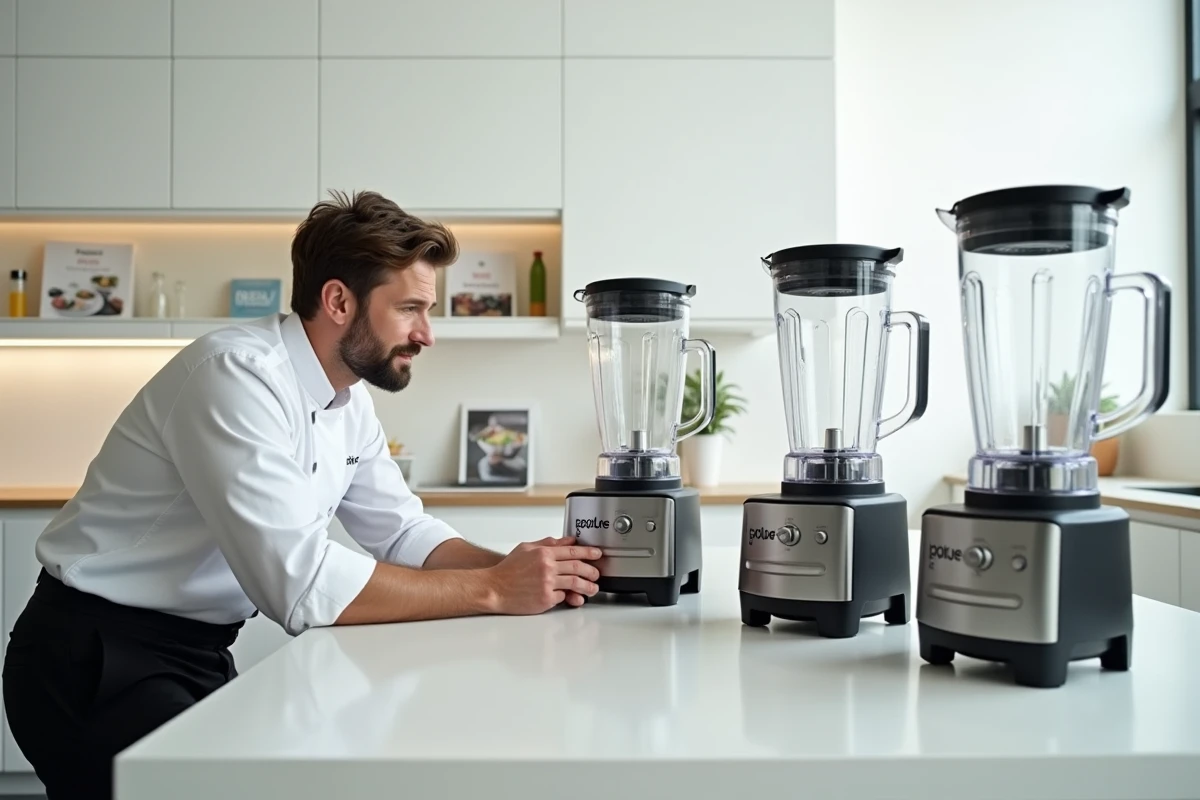
Motor endurance and overheating management: the criteria that product sheets hide
The power displayed in watts grabs attention. A 1,200 W blender seems more powerful than an 800 W model. In practice, this figure says nothing about the motor’s ability to maintain its speed for several consecutive minutes.
Chefs who have been on Top Chef confirm: to replicate the textures from the show (smooth veloutés, stable emulsions, lump-free purées), the motor must run for a long time without overheating. A device that shuts off after 45 seconds for thermal safety will never produce a soup as silky as that from an episode.
Two indicators to check before purchase:
- The continuous operation time indicated in the manual (often absent on entry-level models, which is a signal in itself).
- The type of motor: an induction motor, which is more expensive, dissipates heat better than a standard brushed motor and withstands repeated cycles without premature degradation.
- The presence of an active ventilation system for the motor block, identifiable by visible air vents on the base.
A blender that displays high power but whose motor overheats quickly is less useful on a daily basis than a more modest but enduring model.
Control of low speeds: the parameter that separates the versatile blender from the simple grinder
Many consumer blenders offer two or three speeds, sometimes supplemented by a “pulse” button. For smoothies or crushed ice, this is sufficient. For preparations that require finesse, such as hollandaise sauce, an oil emulsion, or a seedless red fruit coulis, precision at low speed changes everything.
A slow and steady speed prevents excessive air incorporation into the preparation. It also allows for controlling the final texture grain by grain, without suddenly switching from “chunks” to “liquid.”
Devices equipped with a continuous variable speed control (a dial or slider rather than predefined buttons) offer this gradual adjustment. This is a criterion that generic articles on blenders mention little, but which professionals consider crucial.
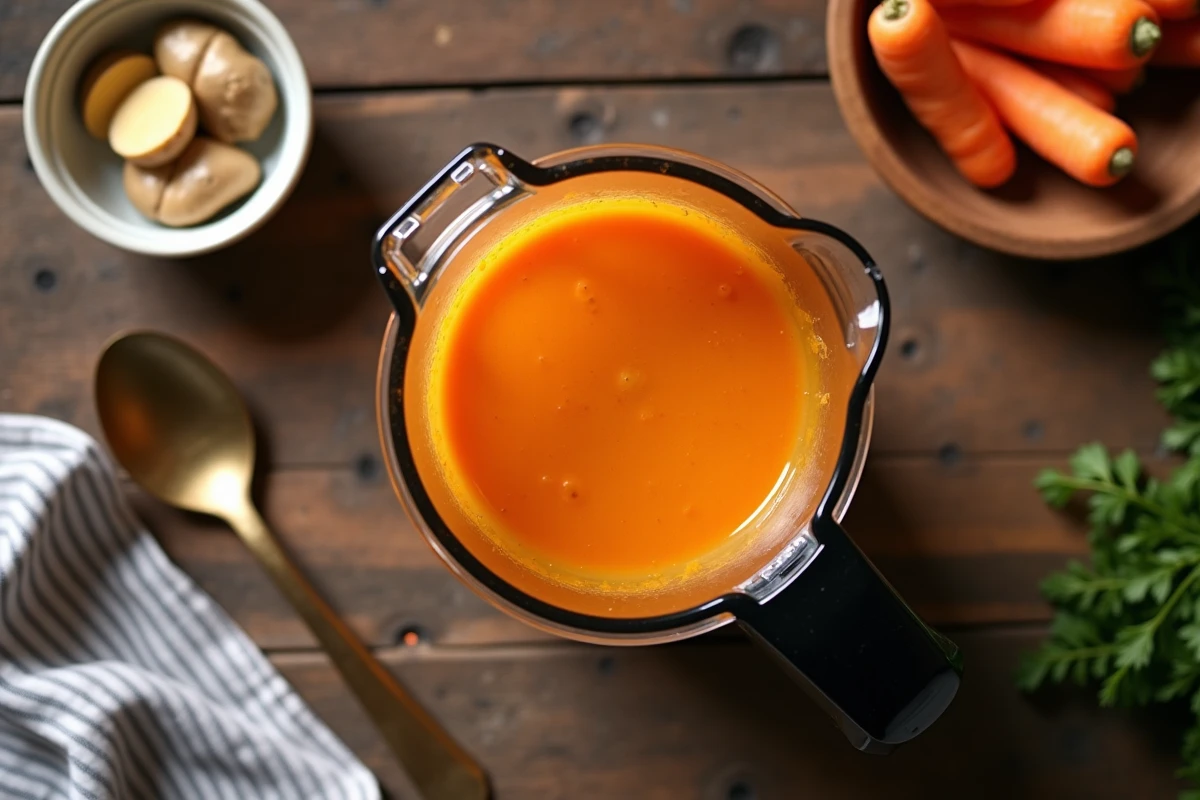
Blending small quantities: the hidden weakness of large bowls
A large-capacity bowl always seems advantageous. In reality, a large empty bowl complicates blending small volumes. A vinaigrette for two, a spice paste, a pesto for a single dish: the ingredients remain stuck to the walls, and the blades spin in empty space.
Two solutions exist on the market:
- Blenders supplied with a small auxiliary bowl, sometimes called a “mini-bowl” or “personal bowl,” whose narrow shape brings the ingredients back toward the blades.
- Models whose main bowl geometry is conical and tapered at the base, which naturally concentrates small quantities at the knife level.
- Adding an immersion blender as a complement for preparations under a cup remains a more reliable option than an oversized blender.
This point is rarely highlighted by brands, which prefer to communicate on maximum capacity. A device that poorly handles small quantities forces the user to multiply utensils or increase recipe volumes unnecessarily.
Connected blenders and automatic programs: gadget or real gain
Recently, some manufacturers have integrated guided programs and automatic load detection into their blenders. The sensor adjusts the speed and duration based on the weight and resistance of the contents.
For daily use, the benefit is limited if the cook already masters their textures. However, for someone who is just starting out or wants to replicate a precise recipe without trial and error, a calibrated program reduces the margin of error on soups, smoothies, and compotes.
The additional cost of these connected models remains significant. Before paying for this technology, ensuring that the fundamentals are present (motor endurance, speed control, small volume management) helps avoid ending up with a sophisticated device that is shaky on the basics.
The name “Top Chef” on a blender serves as a showcase argument, not as a technical specification sheet. The devices from the show and those sold in stores under this license do not share the same components or manufacturing constraints. Choosing a high-performance blender means examining the thermal endurance of the motor, the gradual control of low speeds, and the ability to handle small volumes—three criteria that the label alone does not inform.