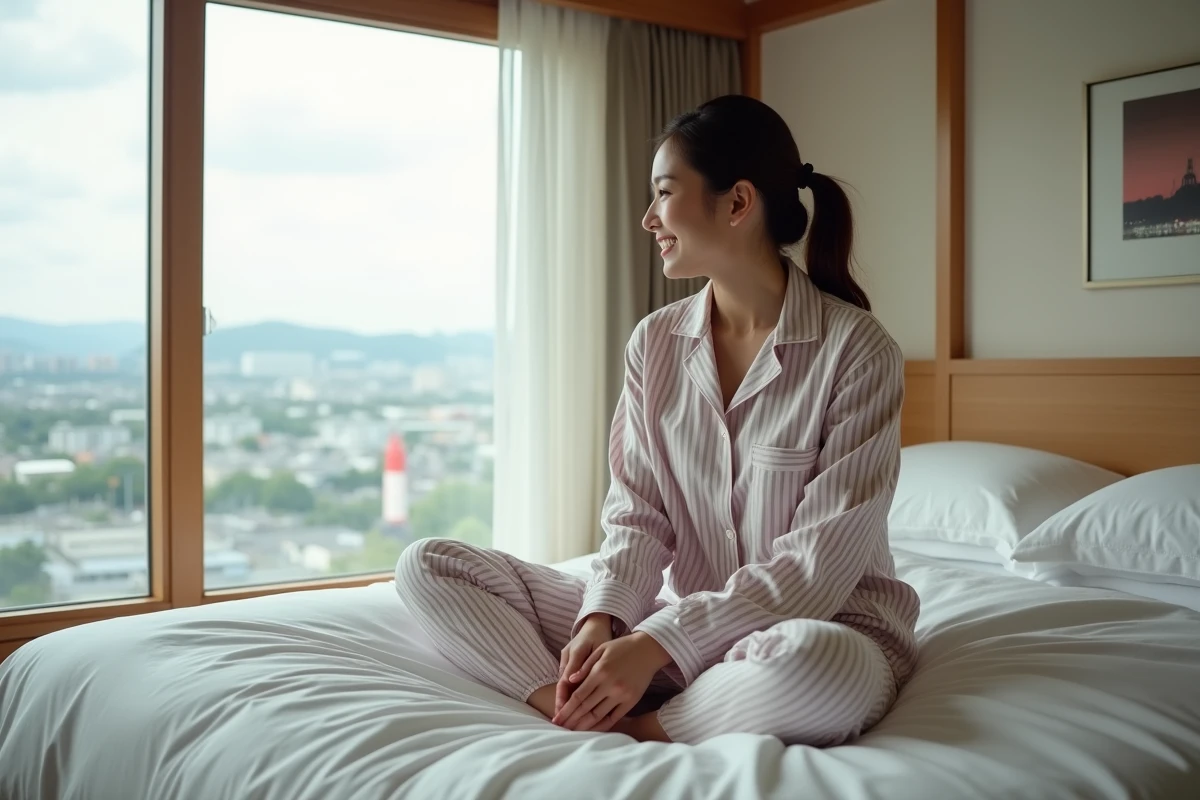
A carefully folded pajama, placed on the bed upon arrival, is one of those details that surprises travelers in Japan. Between a gesture of attention and a tacit rule, this garment raises the question: is it a simple loan or can it become a souvenir of the stay? Japanese hotels, far from any uniformity, cultivate their own nuance on this point.
The hotel pajama in Japan: between tradition and comfort for travelers
In the world of Japanese hospitality, the pajama holds a special place. Between the traditional yukata, the jinbei for warm summer nights, and the two-piece pajama with a more Western cut, each establishment offers its version. The intention is not random: it is pure omotenashi, where the attention to every detail proves that hospitality goes well beyond simple greetings. In a ryokan, you will invariably find a yukata, ready to be slipped on over your underwear, to stroll from your futon to the bath or through the quiet corridors. In urban hotels, the nightgown is often simpler, accompanied by slippers and a toiletry kit, discreetly placed near the bed.
This pajama is far from a tourist gimmick. It marks the boundary between personal space and shared areas, while making it possible to enjoy a leisurely breakfast, sometimes dressed in the same garment. However, the item is not meant to leave the establishment. Unless otherwise specified, it must be left in the room: this gesture of trust does not equate to a gift. A few upscale hotels dare to be different by offering a new pajama, carefully packaged, that can become part of your memories. But elsewhere, the instruction leaves no room for doubt: it must be returned, under penalty of an extra charge on the bill.
From this arises a question that constantly recurs among travelers, confronted with this unique ritual of the Japanese stay: can one keep the Japanese pajama after a night on site, or must it be folded to leave behind? The answer, in reality, depends on the specific rules of each hotel, and they are not always written in black and white. Those who wish to leave with a true textile souvenir can simply purchase one in the specialized shops in Tokyo or Osaka, where the Japanese pajama is sold without any ambiguity.
Can you really take the provided pajama after your stay? What customs say
Japan imposes its codes, sometimes silent but rarely ambiguous. The pajama or yukata provided is part of those attentions designed for comfort, not to be discreetly slipped into the suitcase. From one end of the archipelago to the other, the rule is consistent: the garment remains in the room, unless there is an explicit mention indicating otherwise. Whether staying in an authentic ryokan, a contemporary hotel in Tokyo, or a capsule hotel, the instruction remains the same: enjoy it on-site, without taking it as a souvenir.
In a few high-end establishments, the packaged new pajama is an exception. But the vast majority expects the visitor to return the garment, just like what is done for slippers or other reusable accessories. This respect for the custom, far from being a mere detail, reflects the subtle relationship between hospitality and a sense of boundaries.
Before packing your suitcase, here’s what to keep in mind:
- In principle, the provided pajama must be left at the hotel, unless otherwise indicated by the establishment.
- Honoring this rule is also recognizing the uniqueness of Japanese culture and its thoughtful approach to hospitality.
This visitor’s perspective on local habits may seem trivial. But for those seeking to grasp the spirit of the country, it makes all the difference. For those dreaming of a true textile souvenir, the shops in Tokyo, Kyoto, or Osaka remain the reference, much simpler than the hesitation of the last morning facing the pajama laid on the bed.
Packing for a month in Japan: practical tips and equipment advice
Organizing a long stay in Japan requires anticipating various parameters. The climate varies from region to region, sometimes from one day to the next. Choosing the right clothes gives you the freedom to explore without constraint, regardless of the weather.
To leave nothing to chance, a few essentials deserve their place in the suitcase:
- A compact waterproof jacket, easy to pull out for a downpour or a dawn walk.
- Long-sleeved shirts, very useful in mid-season or in air-conditioned interiors.
Convertible pants, comfortable walking shoes: these choices prove beneficial for alternating seamlessly between bustling alleys and more peaceful trails. For the city, a pair of discreet sneakers is more than sufficient.
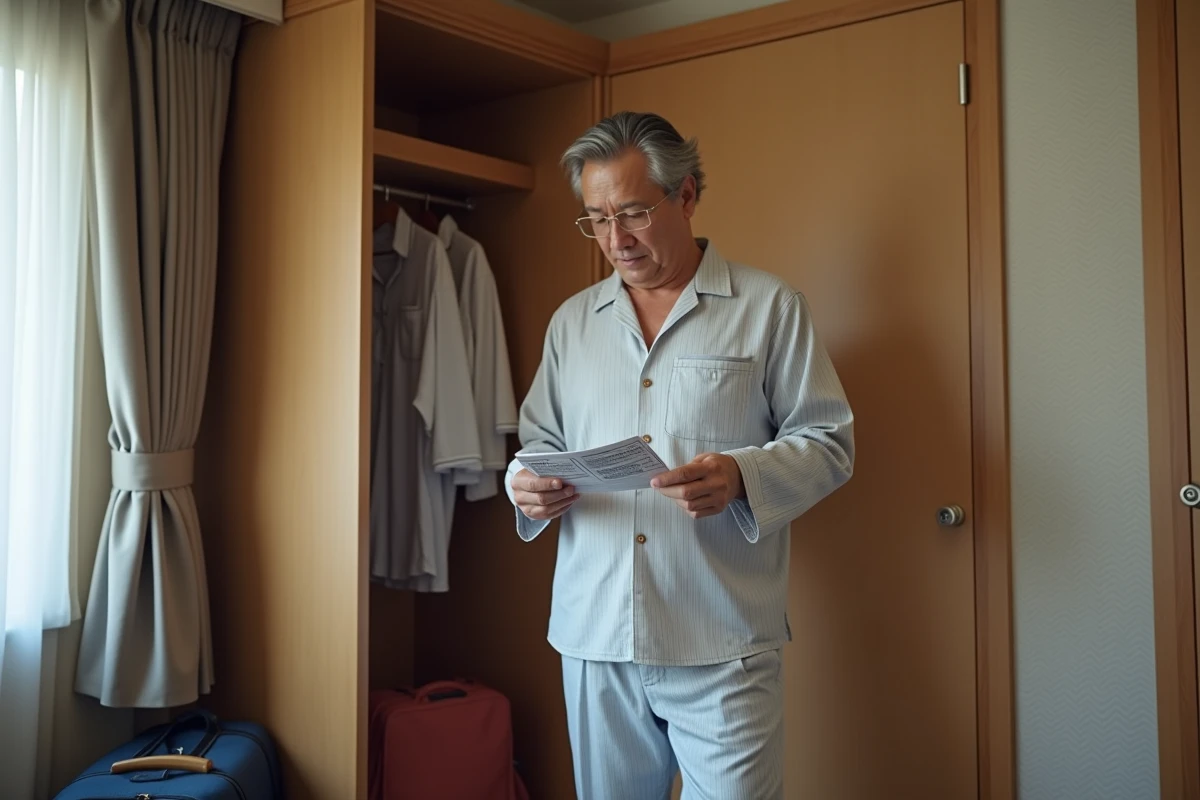
Also think about your own nightwear: even if the hotel pajama or yukata adds a touch of exoticism, it never accompanies you outside the room. Under the yukata, underwear remains appropriate. Finally, if you plan to visit public baths, opt for a lightweight quick-drying undershirt, perfect for navigating from common areas to your room.
Some accessories enhance comfort during the trip:
- Sunglasses and a neck gaiter effectively protect against the sun or a spring breeze.
- A lightweight sweatshirt, very pleasant in the evening or in air-conditioned places.
For those wanting to bring back a Japanese souvenir, nothing beats specialized addresses. Yukata, kimono, accessories, or decorative items: everything can be easily purchased in the historic districts, from Asakusa in Tokyo to Nipponbashi in Osaka. A passport is enough to enjoy duty-free shopping, but minimalism is key: select, weigh, and focus on the useful, without succumbing to clutter. By refining this preparation, you gain in lightness and serenity, while respecting the delicacy of Japanese hospitality.
At the end of the journey, the hotel pajama remains where it should be, a discreet witness to a unique refinement, and proof that, beneath the velvet of traditions, Japan knows how to cultivate the art of detail even in the souvenirs one chooses not to take.